Exclusive gin deals, for new members

The Aviation: A Celestial Classic Defined by Elegance and Botanical Harmony
Discover the elegant, lavender-hued Aviation cocktail—its history, flavour balance, and floral allure—crafted for the discerning Mekong Gin Society enthusiast
GIN COCKTAIL RECIPESCAMBODIA’S EVOLVING GIN CULTUREHOME MIXOLOGY
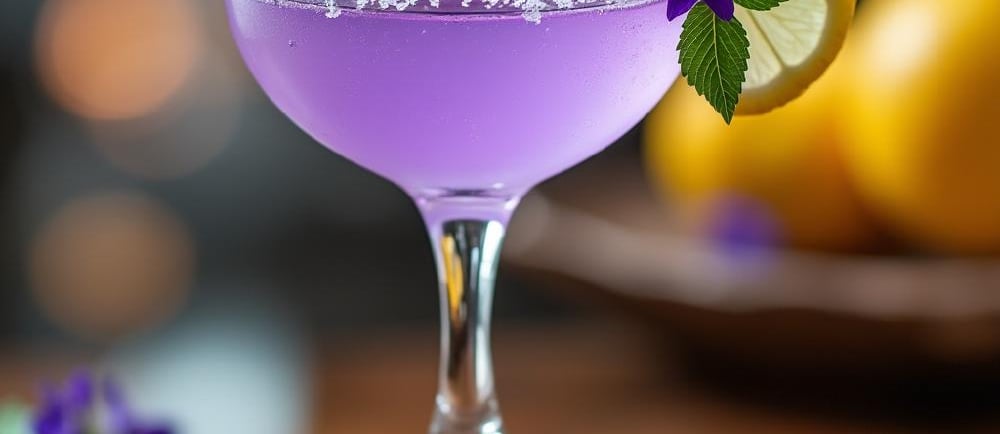
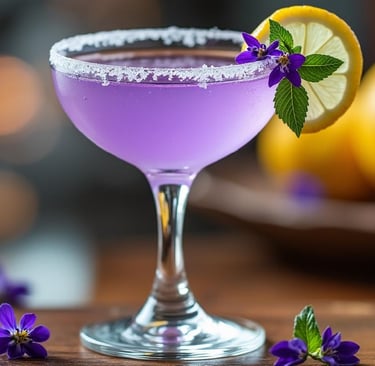
The Aviation
Few cocktails capture the imagination of gin enthusiasts quite like the Aviation. Its soft lavender hue and graceful floral aroma make it one of the most visually striking drinks in the canon of classic gin cocktails, yet its beauty is far from superficial. For the discerning members of the Mekong Gin Society, the Aviation represents a rare intersection of history, artistry, and botanical precision. It is a cocktail that invites contemplation — a drink where every ingredient speaks, yet each whispers in harmony.
To hold an Aviation in hand is to feel a quiet kind of luxury. Its colour suggests twilight; its aroma hints at orchards and spring blossoms; its flavour offers a lifted, perfumed brightness grounded by the clean structure of well-made gin. While many iconic drinks rely on boldness or complexity, the Aviation’s charm lies in restraint — in how its components, used judiciously, create something ethereal. It is a reminder that elegance need not be loud to be unforgettable.
A Journey Through History
The Aviation first appeared in print in 1916, thanks to Hugo Ensslin, the head bartender at New York’s Hotel Wallick. His recipe, published in Recipes for Mixed Drinks, called for gin, lemon juice, maraschino liqueur, and crème de violette — the last of which bestowed that signature lavender tint. This was a period when bartenders were exploring the expressive potential of herbal liqueurs in mixology, and the Aviation showcased just how gracefully florals could intertwine with London Dry gin.
However, by mid-century, crème de violette had all but disappeared from the American market, causing many bartenders to omit it and altering the drink entirely. What remained was a pale, citrus-forward variant lacking its defining colour and aroma. When crème de violette resurfaced in the early 2000s, the original recipe returned, sparking a renaissance among craft cocktail bars worldwide. With its revival came renewed appreciation for the Aviation’s delicate balance — and a reminder of how small ingredients can carry entire eras of cocktail culture.
Ingredients & Rationale
The following specification is tailored for Mekong Gin Society members seeking clarity, floral lift, and botanical harmony.
Ingredients:
• 60 ml (2 oz) floral-forward gin — Recommended: a gin featuring lavender, elderflower, or citrus blossom. Southeast Asian gins with subtle pandan or jasmine notes can also complement the drink’s aromatic structure.
• 15 ml (0.5 oz) maraschino liqueur
• 15 ml (0.5 oz) crème de violette
• 20 ml (0.7 oz) fresh lemon juice
• Ice
Why this profile works:
A floral-leaning gin enhances the Aviation’s signature aromatics without overwhelming the quieter components. The interplay between violet, cherry, and citrus amplifies gin’s botanical profile, allowing the drink to remain anchored in gin rather than drifting into perfumed territory. The lemon provides clarity and lift, while the maraschino adds structure and faint almond-like depth. When balanced correctly, the cocktail unfolds in layers — bright, floral, then gently dry.
Service & Presentation
The Aviation’s beauty comes from intention and precision.
Add gin, lemon juice, maraschino, and crème de violette to a shaker.
Fill with ice and shake vigorously for 10–12 seconds.
Double strain into a chilled Nick & Nora glass or classic coupe.
Garnish with a luxardo cherry or, for a more aromatic experience, a thin twist of lemon.
This is a cocktail best served neat, without ice, allowing its delicate colour gradient — from soft lavender to pale silver at the rim — to shine. The garnish should be subtle; excessive decoration detracts from the drink’s inherent elegance. Still, thoughtful minimalism has its place among craft cocktail garnishes, and a single cherry delivers both colour contrast and aromatic depth.
The tactile experience matters here as well: the silky smoothness of the shaken mixture, the cool weight of the glass, and the floral bouquet rising gently on the first sip all contribute to the Aviation’s reputation as a contemplative drink. Though shaken, its structure carries echoes of balanced stirred drinks through its clarity and refined mouthfeel.
Interesting Notes & Subtle Histories
The name “Aviation” was inspired by the early era of flight. When Ensslin developed the drink, aviation was still new, glamorous, and symbolic of human daring — a theme likely behind the cocktail’s sky-tinted colour.
Crème de violette nearly disappeared entirely, leading to decades of “violet-less Aviations.” Some bartenders argue this created a parallel historical branch, offering two interpretations of the same idea — one floral and visual, the other cleaner and more citrus-driven.
These details add richness to the drink’s legacy, showing how cultural shifts — and even ingredient availability — shape the evolution of the cocktails we consider classics.
Conclusion
The Aviation stands as one of the most poetic expressions of gin. It is elegant without excess, floral without sweetness, and historically rich without burden. For the Mekong Gin Society, it represents a cocktail that rewards precision and celebrates subtlety — a drink that is as much about the quiet interplay of ingredients as it is about its unmistakable colour.
To craft an Aviation is to appreciate how the gentlest botanicals can elevate gin into something transcendent. Whether enjoyed on a warm Southeast Asian evening or presented as the highlight of a refined home cocktail session, the Aviation invites enthusiasts to reach for something higher: a cocktail that feels truly, unmistakably, sky-bound.
Contact
Phone
campbell@mekongginsociety.com
+85586458981
© 2025. All rights reserved. Mekong Gin Society
Telegram